

Working in the generative space between abstraction and figuration, Socolofsky's tapestries record time, encode knowledge, and mediate relationships between bodies, land, and machines.

digital wovens
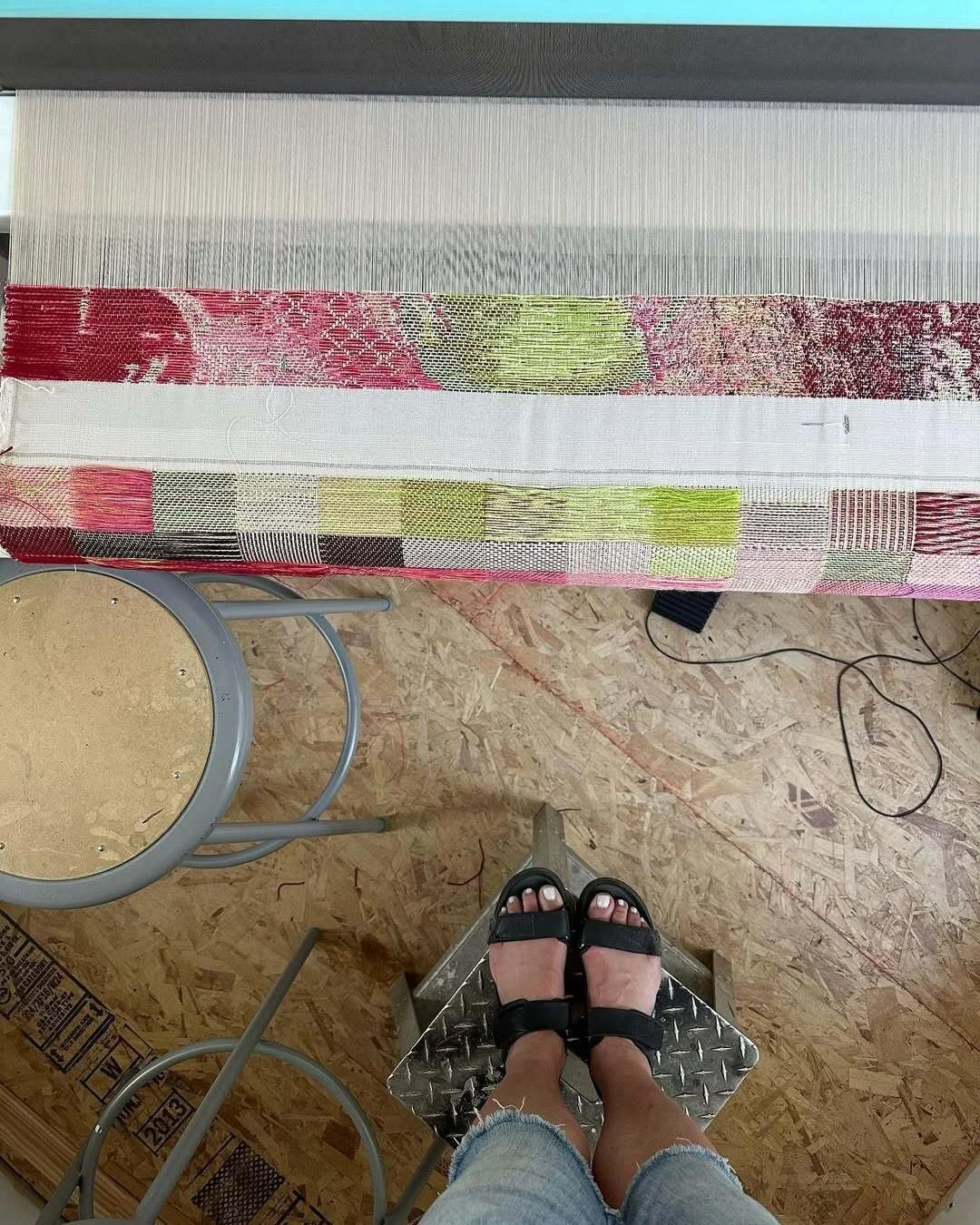
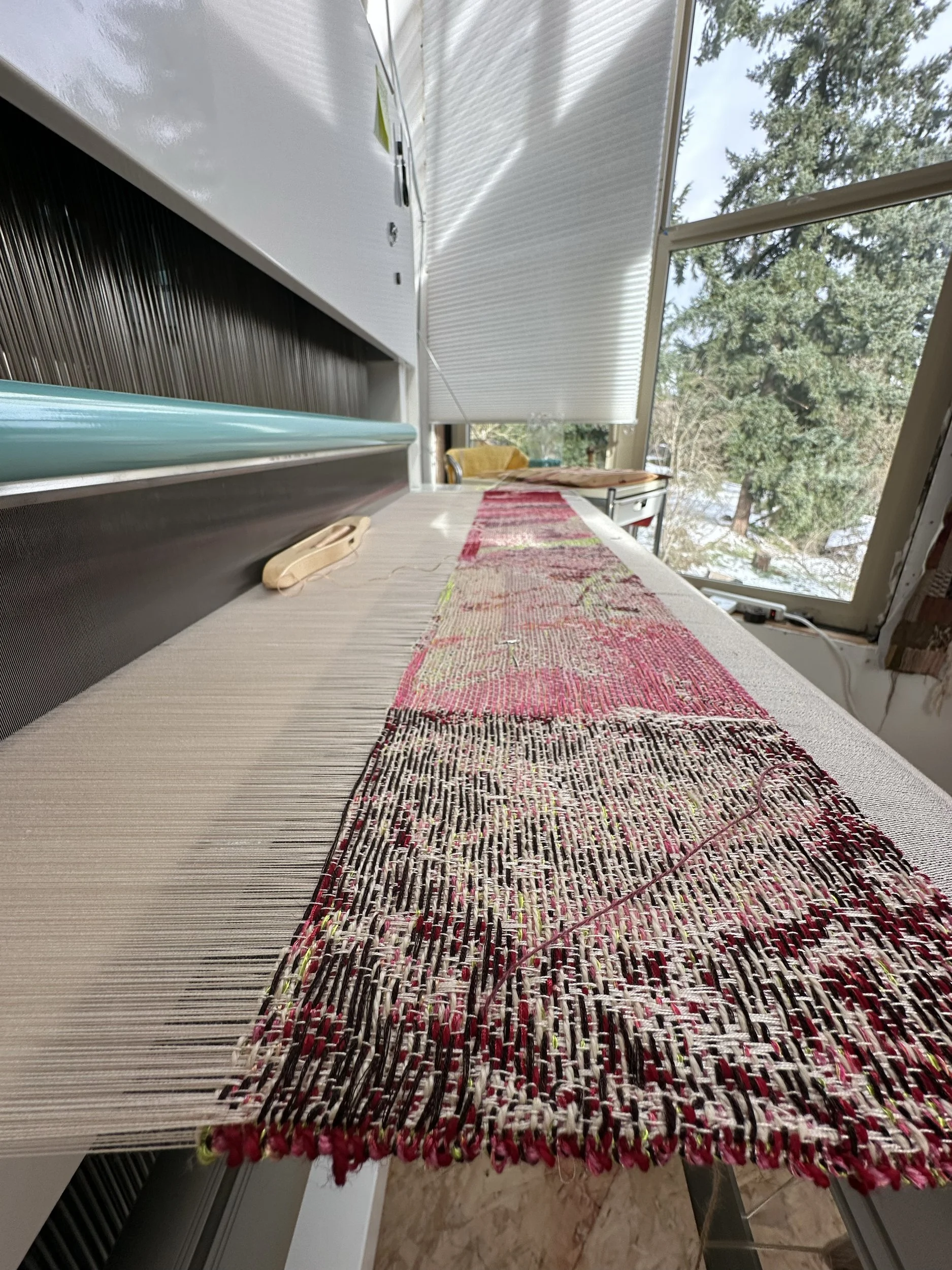
These tapestries transform consumable images—drone stills, satellite images, everyday objects—into digital loom instructions through mathematical strategies. Each shuttle is still hand thrown, requiring the weaver's physical presence and engagement with every complex weave structure across the cloth. Weaving becomes meaning and metaphor for contemplating memory, erosion, impermanence, and our place within deep time.

analog wovens
These works are woven on an ancient frame loom using a Medieval technique known as Gobelin and take an average of one year to complete. The tapestries created are about weaving contemporary urban imagery—graffiti, street photography, archival fragments—into traditional tapestry form. The process demands discipline and slow resistance to digital speed in the modern day of image circulation.
artist statement
My practice merges ancestral handwork with contemporary computational systems to create drawings, woven paintings, and installations that function as both material artifacts and interfaces.
Working across a medieval frame loom, and digital Jacquard technologies, I approach hand weaving as a mode of thinking - a material methodology for understanding how bodies, machines, and cosmologies are entangled within vast relational networks.
Geometry grounds the work. Pattern, symmetry, and proportional systems - vesica piscis, grid, circle, lattice - operate as both compositional structures and metaphysical propositions.
Geometry and weaving predate written language; they bridge mathematics and the sacred, offering a framework through which the infinite becomes momentarily perceptible. Within these ordered systems, I invite chance as a collaborator: glitches, mis-registrations, algorithmic interruptions, and layered imagery. The friction between structure and contingency produces a dynamic field that reflects the complexity of larger systems.
The loom itself is a network - an early computational device organized through binary logic: over/under, presence/absence.
Recent works translate drone footage, hand drawings, field recordings, and bodily gesture into kaleidoscopic woven forms. These translations situate our embodied experience within contemporary information systems, where craft, code, and cosmos fold into one another, and cloth becomes a site for sensing our place within deep time.
Weaving becomes meaning and metaphor for contemplating memory, erosion, impermanence, continuity, and our place within deep time.
the process of digital handweaving
Socolofsky’s work combines the skill and sensitivity of painting with the structured complexity of ancient frame and industrial Jacquard weaving to produce woven tapestries that hover just on the edge of recognition. Her process begins by layering drawings with sourced consumable images: moving drone stills, google earth snapshots, photographs of everyday objects, transforming them using mathematical strategies; then translating these designs into instructions the looms can interpret.
All work is hand woven - combining ancient handwork with computational crafting